
And Have a Little Fun Doing It!
When was the last time a workout made you laugh? You probably don't think of exercise as a fun activity, but that will change once you experience Bounce Bungee in Bryant, Arkansas!
An overhead bungee takes some of your weight, and suddenly a squat or a jump feels brand new. You'll sweat, and you'll concentrate harder than you expected. Somewhere in that first class, your feet will leave the floor for a second and you'll grin about it.
Add the slow, controlled work of Pilates, the stretching and breathing of yoga, and the springy rhythm of rebounding, and you have a fitness routine that's hard to get bored with.
How bungee fitness works
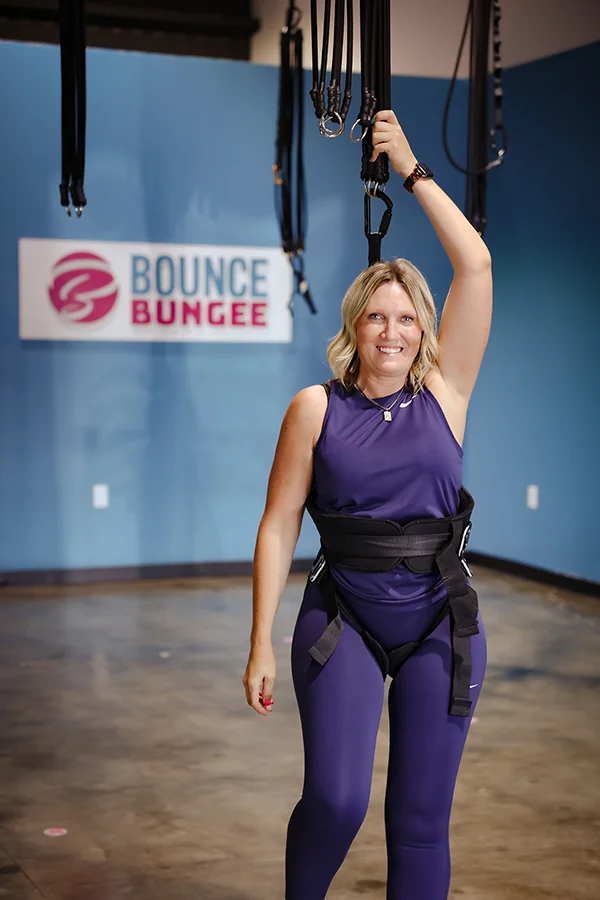
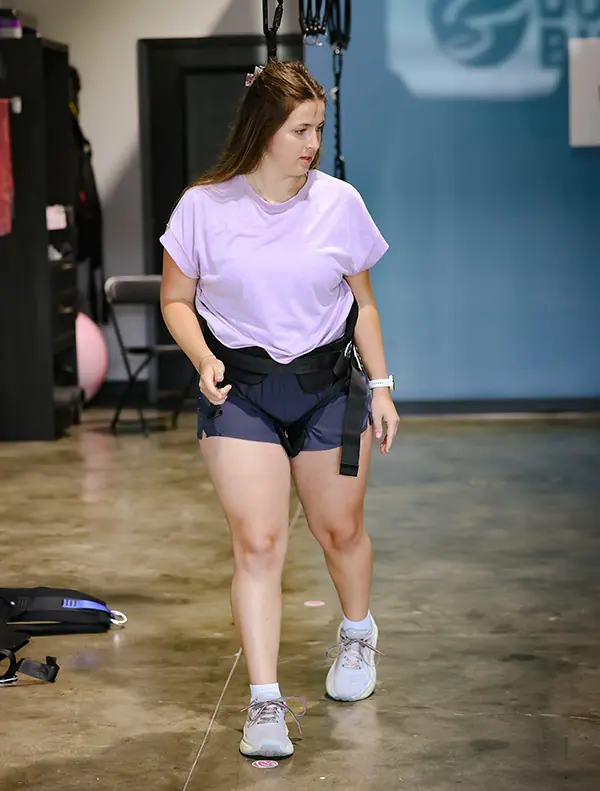
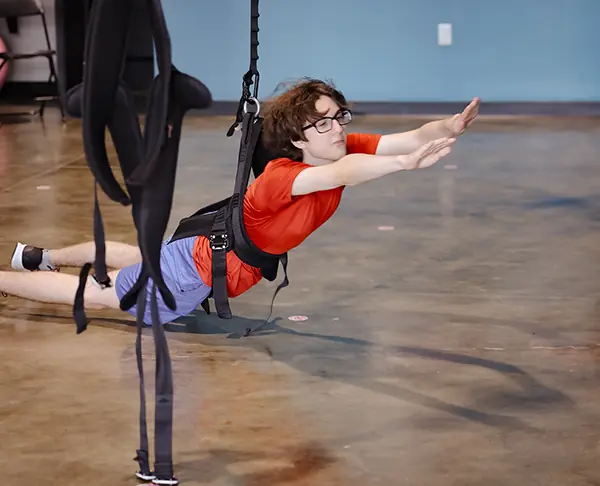
You wear a harness connected to a cord anchored overhead. That cord carries part of your body weight and stretches as you move. It softens your landings, and it pulls back, so you always have something to work against.
A forward lean turns into a balance exercise. A jump becomes a lesson in pushing off the cord and controlling the way back down. Most people spend the first few minutes figuring out how the tension changes as they move, and that discovery is one of the best parts.
Because the bungee absorbs some of the impact, you can feel less of the pounding that comes with jumping on a hard floor. Your heart rate still climbs and your muscles still get plenty of work. How hard it feels comes down to the routine, your pace, and how much practice you've had.
Four Ways To Move
A good routine gives you chances to build stamina and strength while keeping your body moving comfortably. Each of these four classes comes at that from a different direction.
Bungee fitness: cardio with some lift
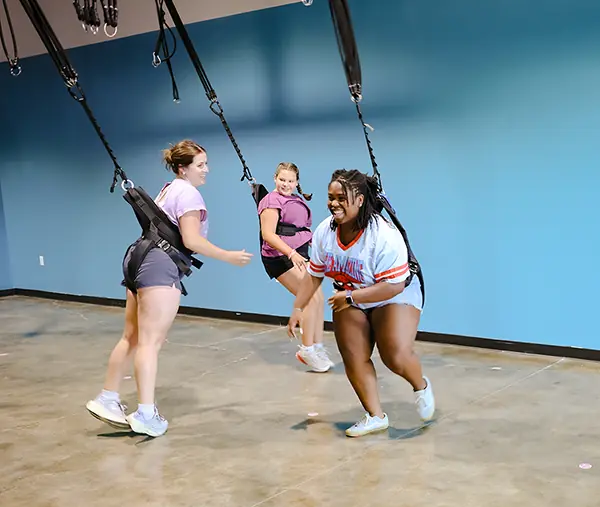
There's no zoning out in a bungee class. You're following the routine, watching your footwork, and learning how the cord responds, all at once.
Your legs drive most of the movement. The muscles around your middle keep you steady when you lean, switch directions, or come back upright. Faster sequences will test your breathing and stamina.
Then comes the first time a move clicks and you lift off with real confidence. That moment tends to carry people through the next round with a smile.
Pilates: slow it down and feel it
Pilates asks you to notice how you move. The exercises center on control, breath, and the muscles that support your trunk.
A tiny movement done slowly can be harder than it looks. Practice regularly and you can build core endurance, flexibility, and a better sense of where your body is in space. It's a nice counterweight to a high-energy cardio day, since it gives you time to work on steadiness.
Yoga: stretch, breathe, settle
Some days call for a deep breath and slower movement. Yoga pairs postures with attention to breathing, which gives you room to work on balance and flexibility. A session can feel gentle and restful or surprisingly demanding, depending on the style.
It can also help you manage stress. Paying attention to your breath and the pose in front of you gives a busy mind somewhere to land for a while.
Nobody expects you to touch your toes on day one. You start with the range of motion you have and build from there.
Rebounding: find your rhythm
Rebounding happens on a small exercise trampoline with a surface that gives a little under your feet.
That bounce makes for a different kind of cardio. Small, controlled moves add up fast once you bring in your arms, change speed, or follow a sequence. The moving surface also keeps you paying attention to your balance and position, so your whole body stays involved while it feels like play.
Progress doesn't have to be dramatic. Maybe you follow more of the sequence this week. Maybe you feel steadier in a pose or need fewer breaks. Those wins count.
Why Mix it Up?
One day you might want a workout that leaves you breathless. Another day you might want quiet stretching and careful movement. Having options means you can pick what fits your energy and your goals that week.
Bungee routines and rebounding both give your heart and lungs a workout, and switching between them keeps every session from feeling the same. Your core gets two very different challenges, since holding a Pilates movement steady asks something other than bracing against a bungee. The slower classes give balance and flexibility the attention they deserve. With this much variety, you're more likely to find something you look forward to, and that's usually what makes a routine stick.
Progress doesn't have to be dramatic. Maybe you follow more of the sequence this week. Maybe you feel steadier in a pose or need fewer breaks. Those wins count.
Nervous about your first class?
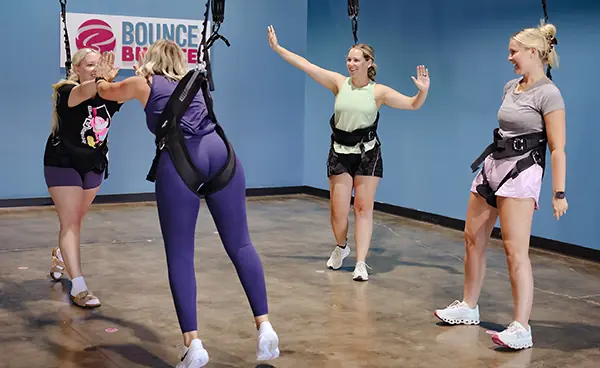
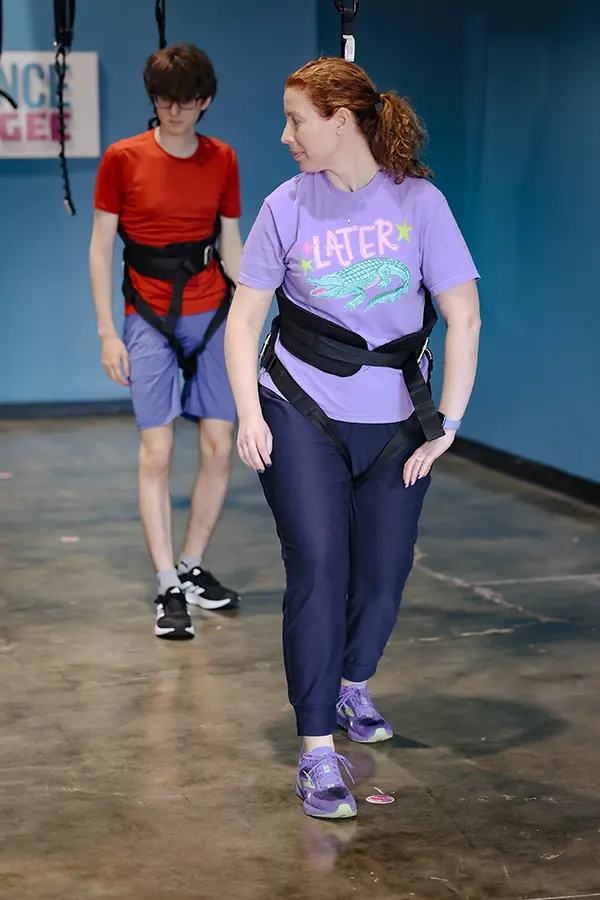
Watching a regular move confidently in a harness can make it look effortless. She had a first class too, and she probably wobbled through it.
Bring your questions. Ask to see a move demonstrated twice, or three times. Learning the equipment and the basic movements takes a little time for everyone.
Women of every shape, size, and fitness background deserve a welcoming place to work out, and wherever you're starting from helps decide the right setup and pace for you. The bungee equipment does have specific weight and fit requirements, so contact us before booking if you have questions about the harness or which class makes sense.
If you're pregnant, recovering from surgery, or dealing with an injury or medical condition, talk with your healthcare provider and with the studio about which classes are right for you.
Find your flight!
Your first stop is Bungee Basics. It covers the safety essentials, gets you comfortable with the support, and builds your confidence one move at a time.
Let yourself be new at something. Figuring out what you can do is half the fun.