
Frequently Asked Questions
A few things to know before you bounce
A few things to know before you bounce
Curious about the harness? Wondering whether you'll be able to keep up? We get it. Trying a new workout comes with questions, and BOUNCE Bungee wants you to feel comfortable taking that first step.
Here are answers to some common questions about bungee fitness and getting started at our Bryant, Arkansas studio.
Getting to know bungee fitness
What is bungee fitness?
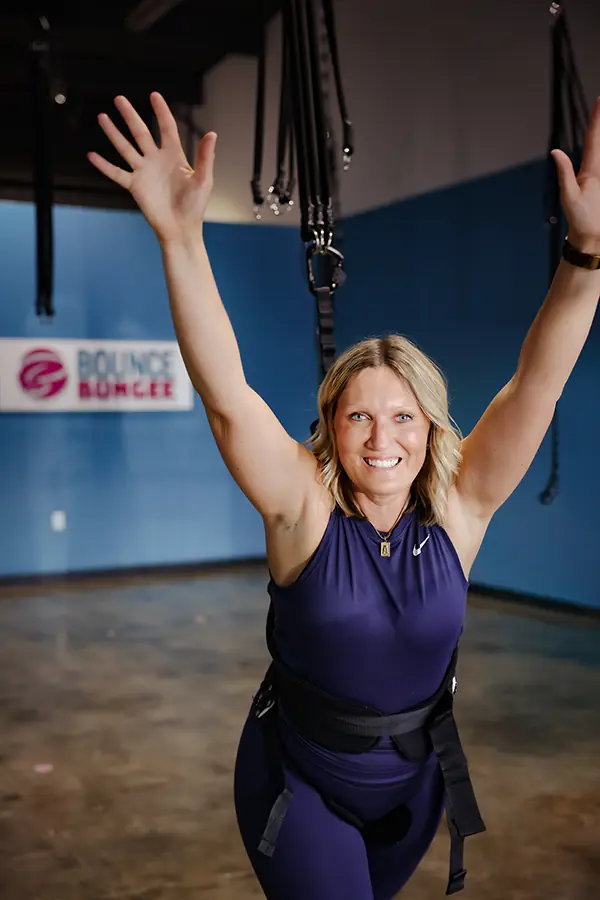
Bungee fitness is a workout that uses a harness connected to an overhead bungee cord. The cord supports part of your body weight and provides resistance as you move, giving exercises like squats, jumps, and forward leans a completely different feel.
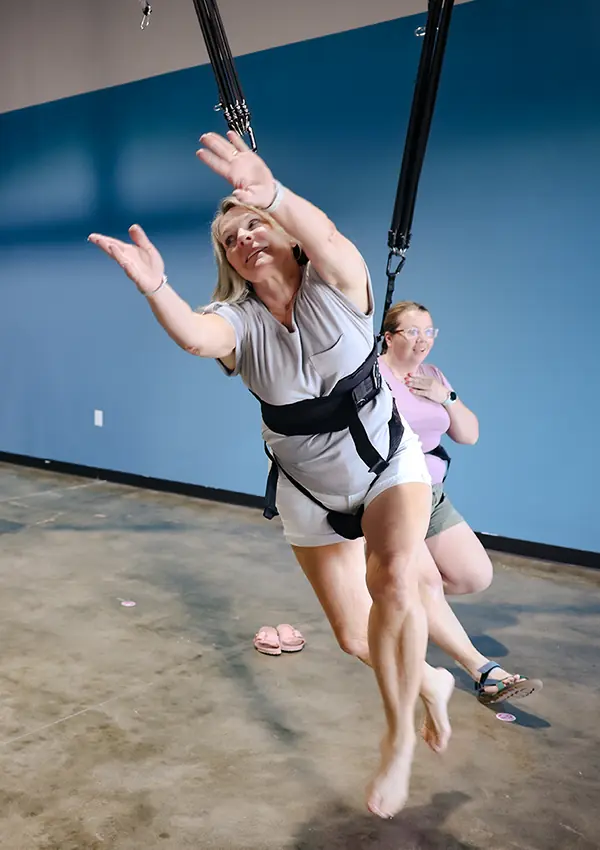
You'll work on coordination and control while following movements that can get your heart pumping. And yes, some of those movements can lift your feet off the floor.
Is this the same thing as bungee jumping?
No. Bungee fitness takes place in a studio, with movements performed close to the floor. You're exercising against the resistance of an overhead cord, rather than jumping from a height.
Is it a real workout?
Absolutely. The cord provides support, but your muscles still have work to do. Your legs help drive your movements, and the muscles around your middle help keep you steady as you lean, change direction, and return upright.
Faster routines can also challenge your breathing and stamina. The intensity depends on the class, the movements, and your pace.
What does low-impact mean?
Low-impact describes how much force your body experiences during movement. In bungee fitness, the cord supports some of your weight and helps soften landings, which can reduce the pounding associated with jumping on a hard surface.
Low-impact doesn't mean effortless, and it doesn't mean there is no stress on your joints. Good technique, appropriate equipment setup, and choosing the right class still matter.
Your first class
Do I need to get in shape before I try it?
You can start by learning the basics at your current fitness level. You don't need to arrive knowing the moves or keeping pace with someone who has been coming for months.
Bungee Basics focuses on learning the safety essentials, getting comfortable with the support, and building confidence. If you're unsure whether the class fits your abilities or health needs, contact us before booking.
Which class should I book first?
Bungee Basics is the starting point for new participants. It introduces the equipment, safety essentials, and foundational movements so you can learn how the cord responds.
Even if you already exercise regularly, moving in a bungee harness is a new skill. Give yourself time to learn it.
What if I'm uncoordinated or can't follow every move?
You have permission to be a beginner. Learning the footwork and getting used to the cord take practice.
Focus on understanding one movement at a time, and ask your instructor to demonstrate again when you need it. Getting more comfortable with a sequence is part of your progress.
Will I spend the whole class in the air?
No. Bungee fitness includes movements with your feet on the floor as well as movements that may briefly lift you off it.
The amount of jumping or suspension depends on the class and routine. Your first step is learning how to move with the cord and control your return.
What should I wear and bring?
Fitted, comfortable workout clothing is generally a good choice because loose fabric can bunch or shift beneath a harness. Leggings that cover the areas where the harness sits may be more comfortable than short shorts. Supportive athletic shoes and a supportive sports bra, if you wear one, are sensible choices.
Bring water, secure long hair, and avoid dangling jewelry. Check your booking information for any additional studio requirements before your first visit.
Fit, comfort, and health questions
Can women of different shapes and sizes participate?
Women of different shapes, sizes, and fitness backgrounds are welcome here. The practical starting point is making sure the equipment fits correctly and the class is appropriate for you.
Bungee harnesses and cords have specific weight and fit requirements. Contact us before booking to confirm the current requirements and discuss any concerns about the setup.
Will the harness feel comfortable?
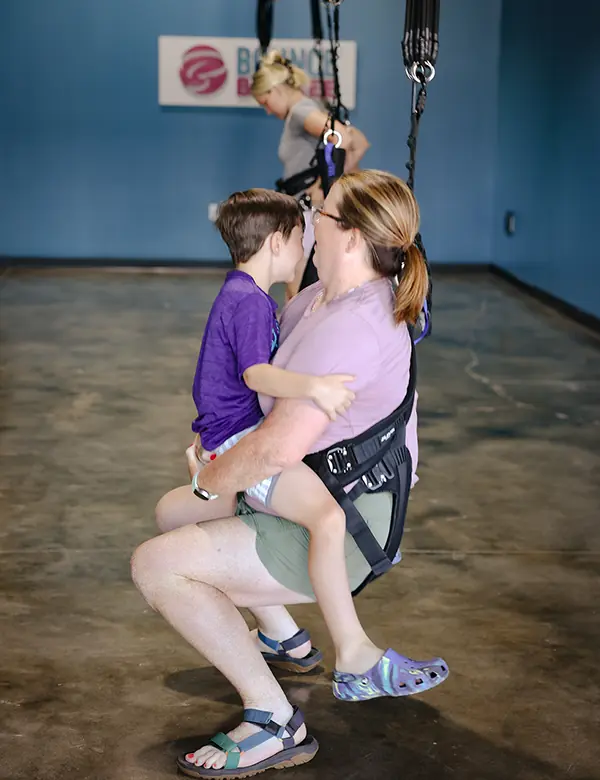
A bungee harness fits snugly and applies pressure where it supports your body, so it can feel unfamiliar at first. Comfort varies from person to person.
Let your instructor know if you feel pinching, rubbing, numbness, or pain. Stop and have the fit checked rather than trying to push through discomfort.
Can I participate if I have knee, hip, or back problems?
That depends on your condition and the movements involved. Reduced impact can make certain exercises feel different, but it doesn't make bungee fitness suitable for every injury or joint problem.
Talk with your healthcare provider about the activity, and contact the studio before booking. Explain that the workout uses a supportive harness, cord resistance, and movements that may include jumping and changes of direction.
Can I take a class while pregnant or after surgery?
Contact the studio before booking and speak with your healthcare provider. Pregnancy, recent surgery, and recovery can affect whether harness pressure, jumping, or other movements are appropriate.
Medical clearance and the studio's participation requirements both matter. Don't assume that a low-impact class is suitable during pregnancy or recovery.
Building a routine you enjoy
How do Pilates, yoga, and rebounding complement bungee fitness?
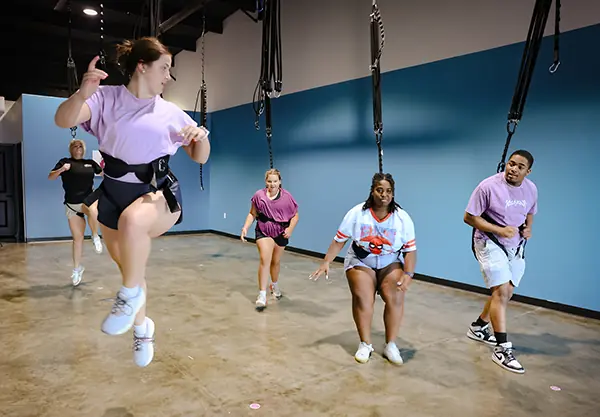
Each activity gives you a different way to move. Pilates emphasizes controlled movement and core endurance. Yoga offers opportunities to work on balance, flexibility, and breathing. Rebounding uses a small exercise trampoline for rhythmic movement that can provide a cardio challenge.
Including different activities can add variety and give you time to practice different skills. Check the current schedule for available classes.
Can bungee fitness help me lose weight?
Bungee fitness can contribute to your overall physical activity and use energy, but weight changes depend on many factors, including eating habits, activity outside class, sleep, and individual health.
We don't promise a certain calorie burn or amount of weight loss. You can also measure progress by learning a sequence, feeling more confident, or completing more movement before taking a break.
How often should I come?
Start with a schedule you can comfortably maintain, and give yourself time to see how your body responds. Your experience, class intensity, other workouts, and recovery needs all help determine the right frequency.
Ask your instructor for guidance on choosing classes and progressing. Consistency leaves plenty of room for rest and easier days.
Ready to give it a try?
Your first class is a chance to learn, ask questions, and see how it feels to move with a little extra spring.